Very quiet data week ahead apart from Australian unemployment figures. This will allow focus on unhelpful Middle East developments for oil prices and inflation.
Key points
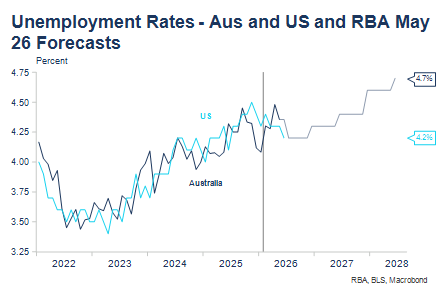
- A very quiet data and events period ahead this week, with only Australian June labour force data of primary interest. There appears slight upside risk to employment and downside risk to market unemployment forecasts.
- This will allow greater focus on oil price developments as the Middle East re-escalates and oil prices rise moderately compared to rises recorded in earlier phases of the dispute.
- Higher oil prices have pressured longer-term yields over the past week, though the US short-end received some relative support from the lower-than-expected US CPI. US pricing still appears too light to me, with likely somewhat tighter policy than priced required before year end given AI and Middle East generated price pressures. The on-again, off-again rise in oil prices makes it more likely, rather than less, that the Fed will lift rates given ongoing inflationary pressures from the AI build out, notwithstanding some correction in semi-conductor pricing.
- Australian market pricing continues to reflect a bias to tighten from the RBA. In both countries, but more so in the US than Australia, it seems that slightly more restrictive policy may be necessary to secure and indeed perhaps hasten the return of inflation to target.
Middle East developments
Two weeks ago, it appeared the Middle East conflict would be less of an influence on the world economy and energy prices and supplies, as the US and Iran ceasefire agreement continued to hold. The past week has seen a re-escalation of the conflict with both parties declaring the ceasefire agreement void. Axios is reporting that the US is considering a longer, broader confrontation, which could run for days or weeks, depending on Iranian actions.
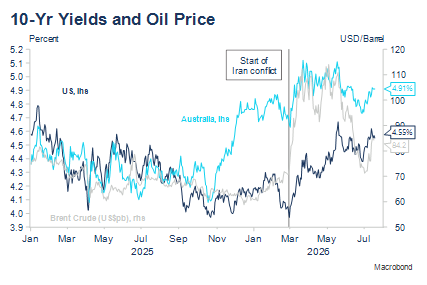
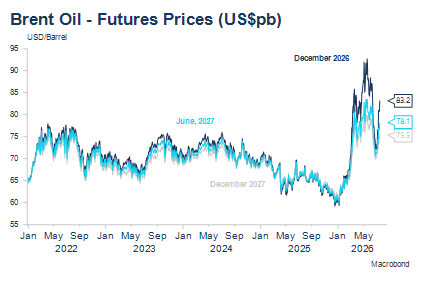
Oil prices and longer-term bond yields have risen over the past week as a result, continuing that correlation. Oil prices have risen a further 2% (US$1.66 approximately) in weekend trading on IG Markets, but at just under US$86pb, remain well below the highs above US$110pb traded in the early stages of the conflict. Futures prices, which had been tracking below the RBA’s base case quick resolution scenario, are rising again, though at this stage the Strait of Hormuz remains open, with Iran at the time of writing on Sunday not yet attacking transiting shipping.
The week ahead – struggling to come up with a calendar!
Developments in the Middle East will likely be the key focus in what is shaping up to be one of the quietest weeks for data and events outside of Christmas/summer holiday break periods in Australia. The NZ quarterly CPI used to be worth a look, especially for components such as international airfares and furniture, though that’s not as much the case these days given Australia has already released two full monthly CPIs. Still, it will be interesting to see whether the downside core inflation surprises of the US CPI in June and two partial indicators of Australian inflation, the Melbourne Institute Trimmed Mean (-0.4% m/m in June) and NAB Survey Retail Prices (-0.3% at a quarterly rate in June), are repeated.
The US only has second-tier housing data and a variety of regional business surveys that will give some guidance for estimates for the July ISM surveys. These, and many other data points, have again been rendered somewhat irrelevant in the near term given the renewed hostilities in the Middle East and more recent rise in oil prices. The Fed has entered its communications blackout period ahead of the July 28-29 FOMC Meeting, where no change in interest rates is mostly priced.
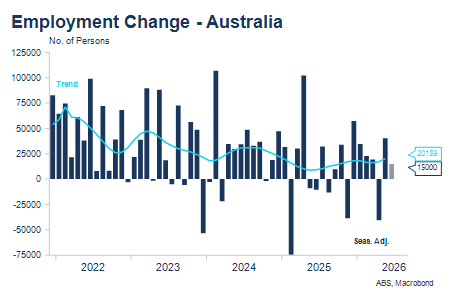
In Australia, the Labour Force data for June are published on Thursday. The market has forecast a relatively soft 15,000 rise in employment, likely reflecting last month’s relatively large 40,000 rise. The latter principally reflected the reversal of a 42,000 fall in April likely due to seasonal adjustment challenges associated with the timing of Easter, school holidays and ANZAC Day.
The risk would seem to be on the upside to the market’s +15K forecast for employment growth in June for this reason, though another soft outcome would provide greater support for those arguing the next move in Australian rates is down, given employment would have averaged very little growth over the past three months.
Higher and then lower and now slightly higher again oil prices, will complicate interpretation of underlying trends in economic activity and inflation in coming months. The longer oil prices remain somewhat elevated, the greater the chance that current above-target US inflation trends a little further above target, supported by the continuing near term pressures from the global AI build out. This justifies US and Australian markets continuing to price somewhat higher short-term interest rates – more so in the US than Australia – although in neither country does it appear that interest rate levels are a long way wrong. The argument is mainly about the slight adjustments in restrictiveness required to ensure and slightly hasten the return of inflation to target.
The Australian unemployment rate was close to rounding to 4.3% in May but printed just above the rounding barrier to take it to 4.4%. That’s two months above the RBA’s 4.2% June quarter forecast. Even a reversion to 4.3% (for me slightly the risk compared to the market’s 4.4% forecast this month), would amount to an upward revision to the RBA’s unemployment forecasts in August, helping lower wages growth forecasts a little in the medium-term, though the high Minimum Wage and Award Wages adjustment unhelpfully works in the other direction. Monthly CPIs suggest the risk remains on the low side of the RBA’s 1% Q2 TM forecast.
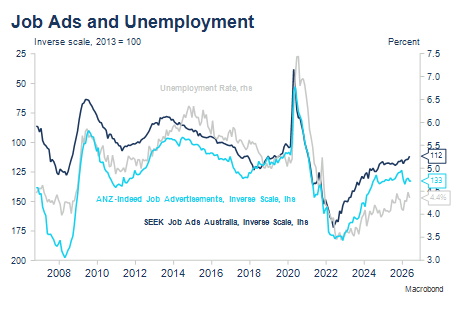
I’ll be most interested in seeing if the slight deteriorating trend that has been emerging in SEEK Job Ads in recent months continues in June. That hasn’t been confirmed by the ANZ job ads series, but if sustained would be a warning of an easing in labour market conditions. Falling job ads are usually a strong indication of declining interest rates in the medium-term.
All times shown below are AEST.
Tuesday 21 July
- 08:45am NZ Q2 CPI
Thursday 23 July
- 11:30am Australian Labour Force (+15K and 4.4% expected, previous +40K and 4.4%)
- ECB Board Meeting (no change expected)
Australian and US interest rate market developments
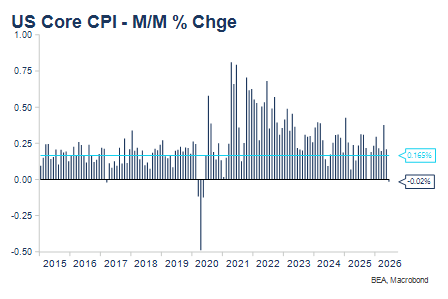
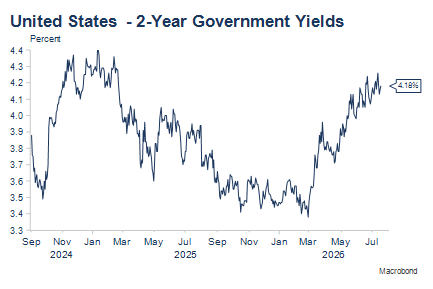
Rising oil prices were the dominant force affecting the longer-ends of interest rate markets globally over the past week and a half, though US short-ends were assisted by the paring back of expectations for Fed tightening after the June US CPI surprised on the low side. The US core rate printed unchanged (a relatively rare event), after a variety of factors all tended to coincide on the downside in the month.
A few Fed speakers warned that it was considerably too early to declare the war on US inflation won despite the better-than-expected June CPI. Several remain concerned about upside risks to inflation, not helped by the renewed rise in oil prices. Peak pricing in the US reduced from nearly two interest rate rises by April next year to just under one and a half increases by mid-2027. A full rate increase remains discounted by the December meeting this year, which still looks a little light to me, with a 75% chance attached to a rate rise by end October. This reflects both the strong anti-inflation rhetoric from incoming Chair Warsh that continuing above target inflation will not be tolerated, while at the same time, US PCE inflation continues to run above-target, notwithstanding June’s better than expected core CPI outcome.
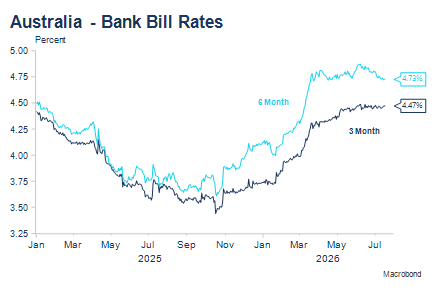
Australian interest rate markets continue to reflect a greater chance that the next move in rates is another increase. Around a 60-65% chance of a further rise is reflected in market pricing at the November, December and February meetings, while at the same time, the market has been unwinding easing pricing at the end of next year that had been in evidence in recent weeks. As in the US, any reduction in interest rates likely remains a very distant thought given Australian inflation continues to run well above the RBA’s 2.5% target.
Technology shares remained under pressure in the past week, which was likely another factor constraining upward pressure on yields, however, with the AI boom still likely to be incredibly large, this remains more of a question for stock market valuations than for likely economic activity and pricing pressures in the near term.