Hot US October CPI and associated hawkish Fed commentary sees significant repricing of US interest rate markets, with negative implications for Australian yields also. Australian labour market data this week should clarify why early Australian interest rate cuts are not on the agenda.
Key points
- The repricing of US monetary policy expectations after the third successive 0.3% core CPI outcome was the dominant driver of bond markets in the US and Australia over the past week.
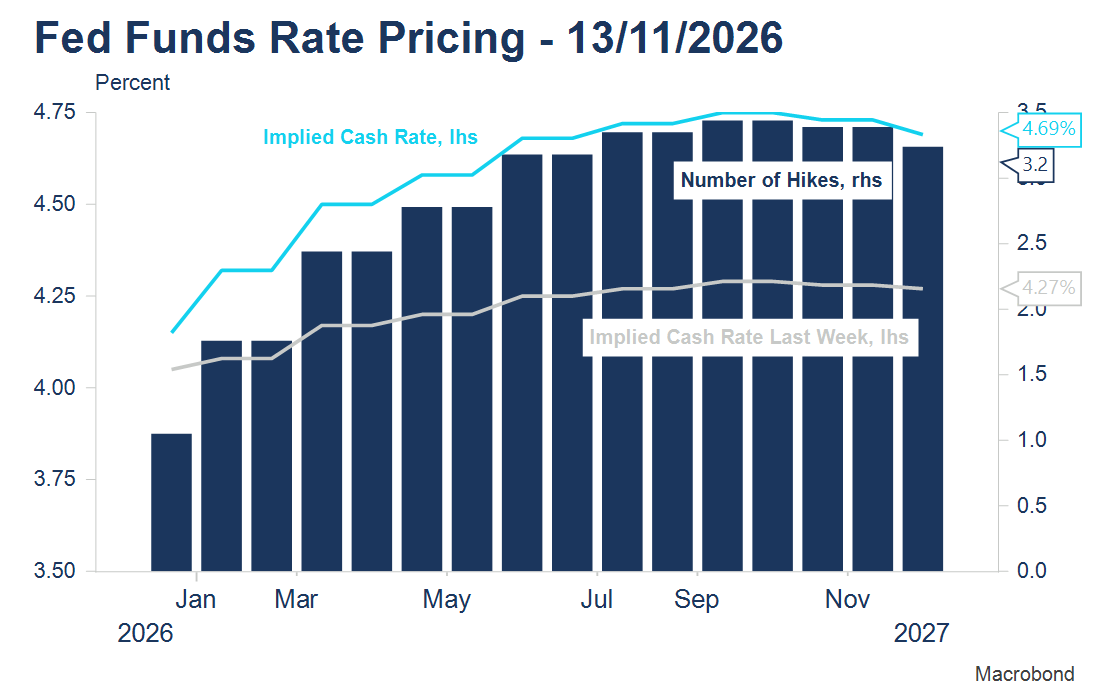
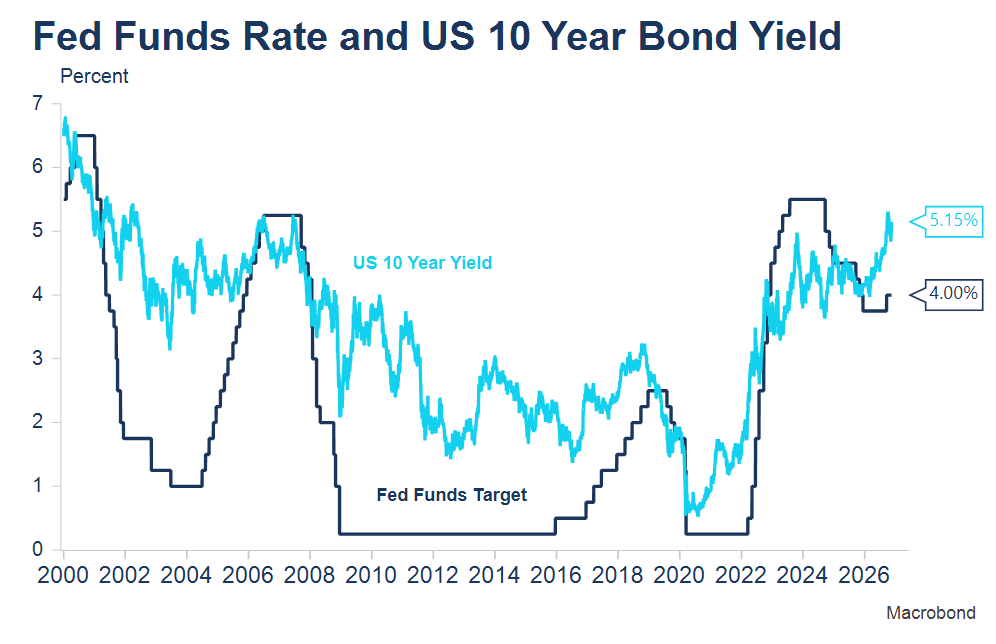
- US markets now discount a much more reasonable three and a half further interest rate tightenings by the Fed over the next twelve months, compared to just over one and a half rate rises priced last week. With Australian markets continuing to flirt with the pricing of a peak for Australian cash rates, this led to considerable outperformance of Australian bond yields, though yields still rose.
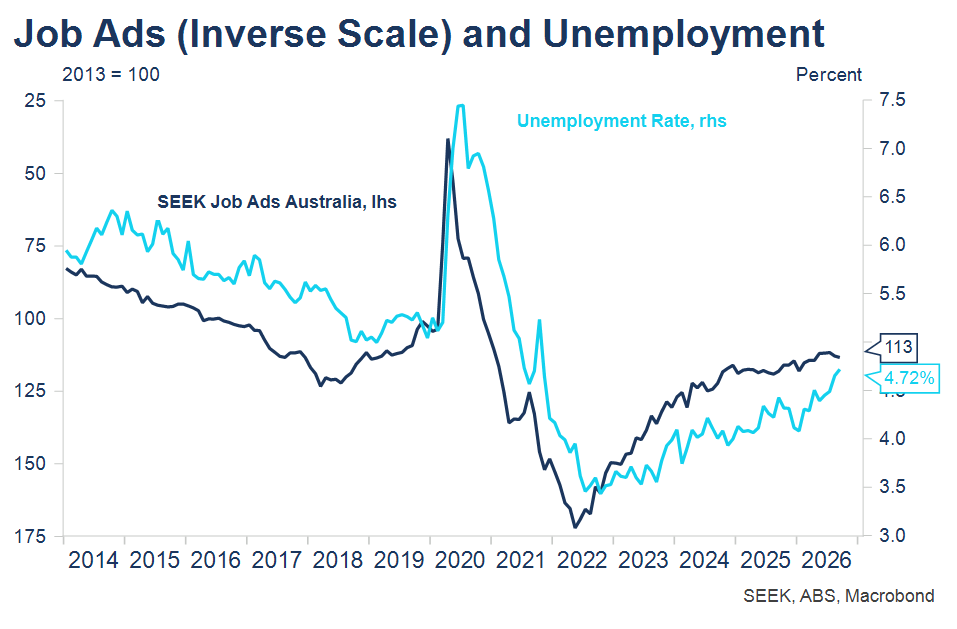
- Australian labour market data this week should reveal why the RBA cannot deliver at-target inflation any time soon (wages growth is too strong) and reverse what has seemed to me to be misleading indications of labour market weakness in recent Australian labour force releases. These signals have coincided with the Australian Bureau of Statistics modernising the survey!
- There are a huge number of Fed officials speaking over the week, as well as the release of the FOMC Minutes. This may shed light on whether a 50bps move at the December FOMC Meeting is a possibility, as suggested by Governor Waller last week. That seems possible to me as the Fed has been taking its time analysing the economy and perhaps is already de facto operating in Chair Warsh’s six policy meetings a year framework. That would imply potentially larger moves, given less frequent meetings.
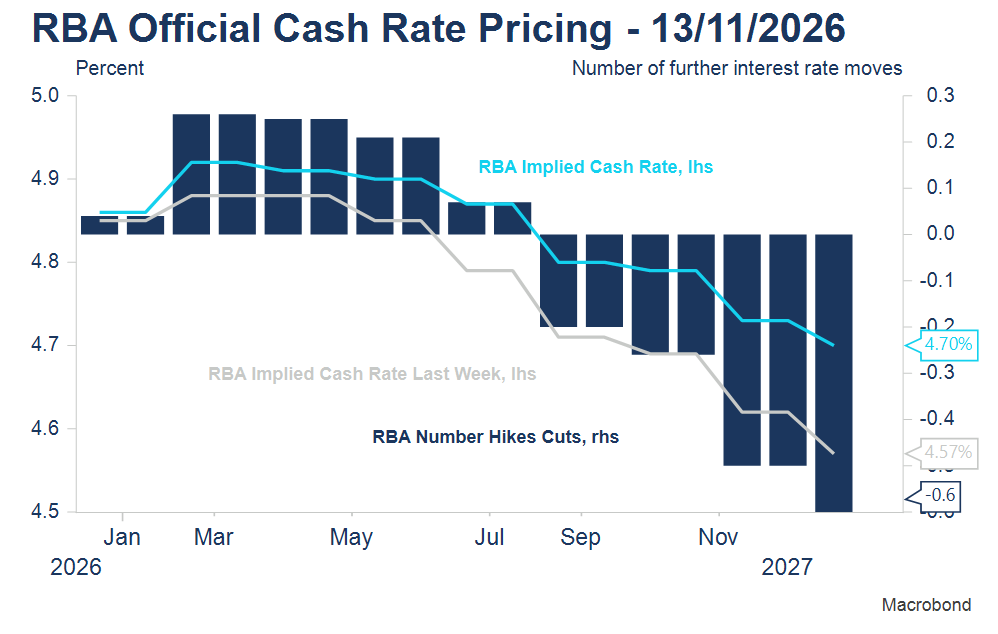
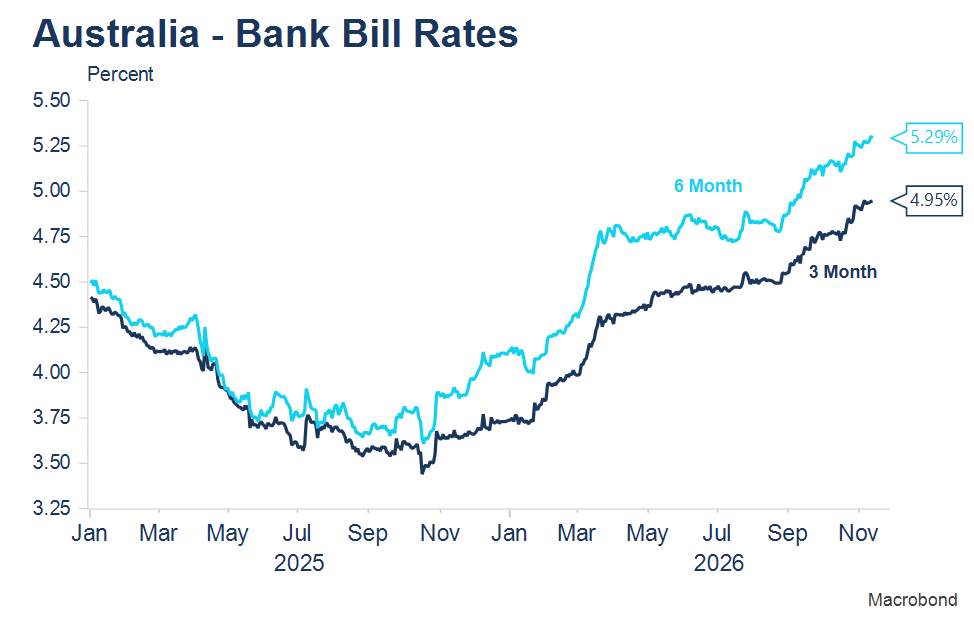
- The RBA Minutes are also published, though with the three Australian dissents being for no change. The key will be when and in what direction the RBA might next move interest rates. Market pricing broadly agrees with our view that after back-to-back increases at the two recent Board meetings and a total of five increases over 2026, the RBA Board was always likely to have an extended period of unchanged interest rates while it assessed the impact of its previous actions.
Recent developments in interest rate and bond markets
While recent weeks have been all about technology share price weakness and oil price developments, this week it was back to inflation data and associated central bank commentary. Most of the action was in US bond markets, though the significant repricing there – which basically reversed the considerable repricing on previous weeks’ technology share price swoons – as is usual, had an impact on Australian bond yields also.
The October US CPI did the damage, with the core rate of inflation printing at 0.3% m/m for the third month in a row. No y/y rate was published as the US CPI was not produced a year ago due to the US government shutdown late last year. But annualising a 0.3% outcome produces an inflation rate above 3.5%, not one heading to the Fed’s 2% target.
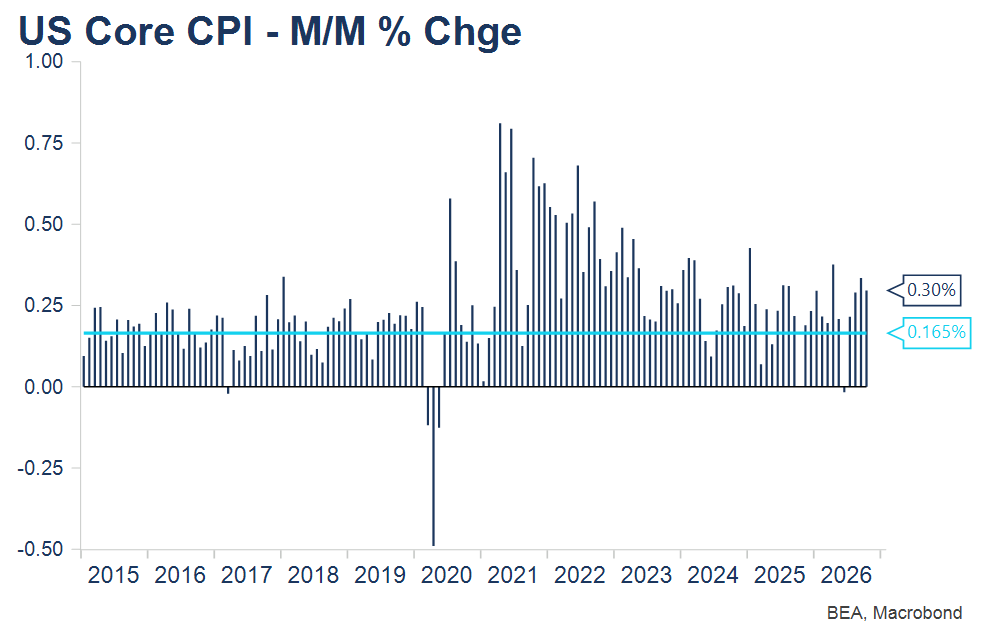
Fed Governors speaking before and after the release of the US CPI sounded very hawkish, with Governor Waller even noting that he would support a 50bps interest rate increase at the December meeting. Most other Fed speakers reiterated the US inflation rate had been too high for too long, and this should be the primary focus for the Fed, given the economy continues to grow strongly and the US labour market is strengthening.
While other Fed speakers have not supported Governor Waller’s 50bps suggestion, that makes quite some sense to me as I was puzzled why the Fed did not tighten further in October, given it was clear further monetary tightening is needed to return US inflation to 2%. The Fed may to an extent already be following new Chair Warsh’s preferred six policy meetings a year agenda – considering the data and trends over slightly longer intermeeting policy action periods, before reaching a conclusion about the appropriate course for monetary policy. That would fit nicely with a 50bps move in December after the no change with three dissents decision in October.
US interest rate markets significantly repriced as a result. The OIS curve now prices a much more reasonable three and a half further 25bps tightening moves by September 2027 (up from just over one and a half moves last week). This also led to quite dramatic increases in US 2 year (+37bps) and 10-year yields (+29bps) over the week. Oil prices were broadly unchanged over the week, while tech shares recovered a little, even as Nvidia’s CEO departed.
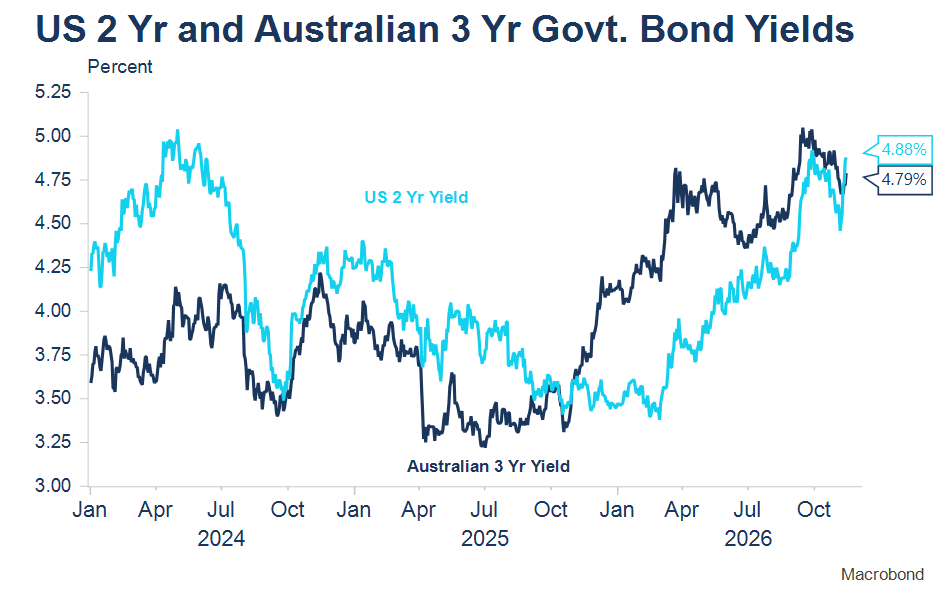
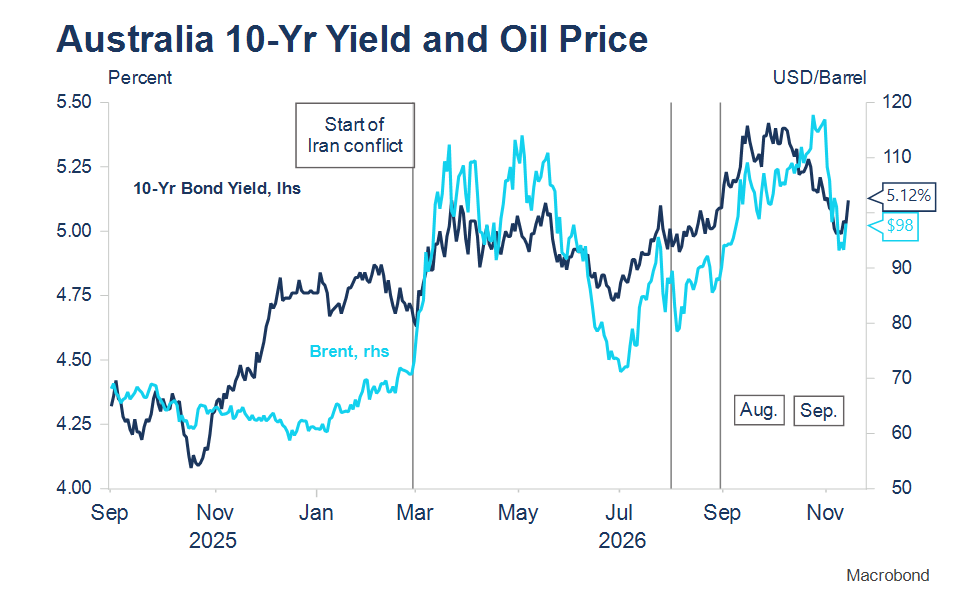
Australian bond yields significantly outperformed US bond markets but yields still rose given the sharpness of the selloff in US yields. This is usually the case, with Australian bond yields almost always directionally correlated with US yield developments.
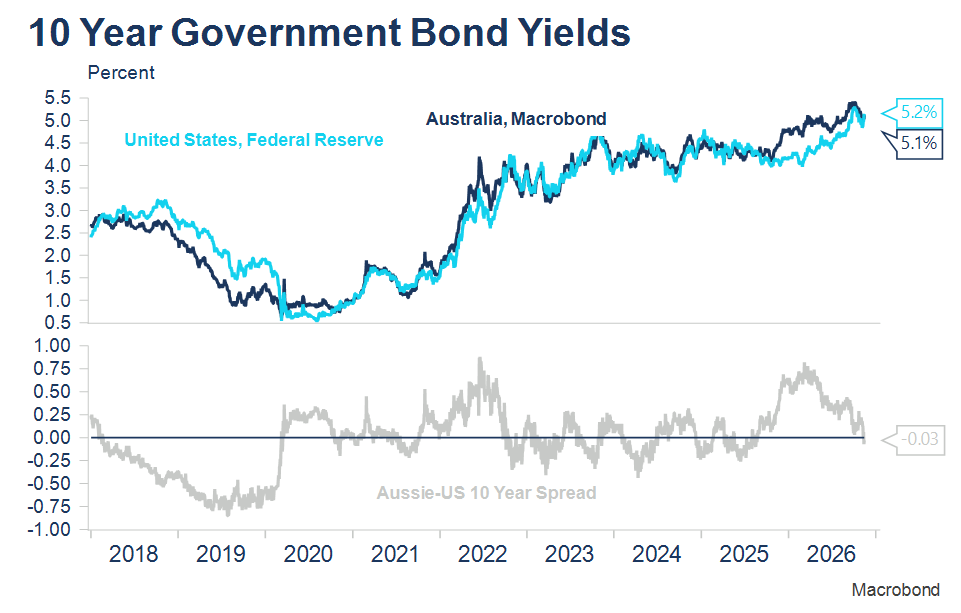
However, with the Australian short-end continuing to flirt with the notion that Australian cash rates have peaked, the rises over the week in Australian 3-year bonds (+13bps) and 10-year bonds (+12bps), were considerably smaller than US market interest rate moves. The Australian OIS curve is now pricing a 60% probability that Australian interest rates are reduced by 25bps by December next year. This compares to a rate cut by end 2027 being more than fully discounted this time a week ago.
Bond market outlook
The outlook for bond yields continues to chiefly reflect the combination of the sizeable AI investment boom (and associated demand related inflationary pressures) and the significant impact on oil prices and related product supplies from the Middle East conflict (a supply side inflation effect). Labour markets in the US and Australia also remain relatively tight.
While the medium-term effects of AI remain highly uncertain (my guess remains that the technology will ultimately be quite disruptive for employment but that this still not be significant for a few more years), after inflation has spent so long above-target, central banks have become more aggressive and attentive to their inflation targets in recent months.
The past week has seen US markets once again significantly reappraise the outlook for the Fed Funds rate, which had been unrealistically lowered in recent weeks as US technology share prices fell. The higher-than-expected core CPI outcome for October saw Fed speakers out warning about continuing too high US inflation, with significant flow on effects for the whole US yield curve but to a considerably lesser extent for Australian bond yields also.
How bond markets traded in the past week is an important reminder that US interest rate direction is key for global bond yields and it is very rare to see US interest rates rising and Australian yields falling at the same time.
It’s an easier bet to make that the Federal Reserve has more tightening to do than for the RBA, with a 50bps rise in December a real possibility. The large number of Fed speakers this week and the FOMC Minutes may give more insight into that probability. In Australia, with the RBA likely on hold for an extended period, term yields will be dragged around chiefly by US yield developments. Both markets appear more reasonably priced now after last week’s large US market moves, though perhaps there might be some further risk of a 50bps rise to be priced into the US in the short term. With US labour market data set to remain strong in coming months, this still inclines me to be slightly bearish term yields, while I also continue to fade any early pricing of interest rate cuts, especially in Australia.
The week ahead
While it’s another relatively quiet data week in the US, the update of Australian wages trends and labour market data should clearly reveal why the RBA cannot deliver at-target inflation any time soon. RBA and Fed Minutes should both be interesting, though of course the three dissents in each camp were in different directions. The FOMC Minutes might cast some light on the prospect of a larger increase in December, as might a host of Fed speakers during the week. As noted earlier, Australian labour market risks are seen as being to the strong side.
Times shown are AEDT.
- Sometime during the week: AOFM issues a new June 2057 bond.
Monday 16 November
- 05:40am Fed’s Schmid speaks
Tuesday 17 November
- 01:05am Fed’s Williams opening remarks
- 04:00am Fed Chair Warsh delivers opening remarks
- 06:15am Fed’s Hammack on Bloomberg TV
- 10:00am RBA Governor Bullock appears on panel at ASIC Annual Forum
- 11:30am RBA November Board Meeting Minutes
- 23:30 Fed’s Musalem speaks
Wednesday 18 November
- 00:30am US Retail Sales, ex Autos and Gas (October); Market forecast +0.3% m/m; previous +0.2%.
- 01:15am US Capacity Utilisation (October), expected 76.8%, previous 76.9%
- 01:30am Fed’s Hammack speaks
- 06:25am Fed’s Williams speaks
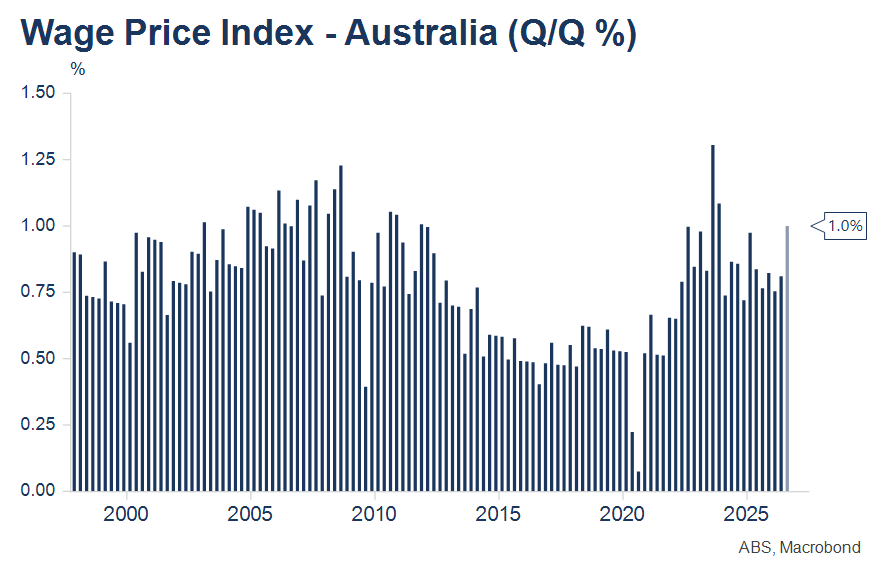
- 11:30am Wage Price Index, Q3, expected +1% q/q, 3.4% y/y; previous +0.8% q/q, 3.2% y/y
Thursday 19 November
- 06:00am FOMC October Meeting Minutes
- 06:30am Fed’s Williams speaks
- 11:30am Australian Labour Force Release: Employment expected +25,000, previous -39,000; unemployment expected 4.7%, previous 4.7%.
Friday 20 November
- 04:30am Fed’s Goolsbee speaks
- 08:00am Fed’s Barkin Fireside chat
- 10:30am Fed’s Paulson speaks
- 11:15am Appearance by RBA Monetary Policy Board Member Renee Fry-McKibbin at the Centre of Applied Macroeconomic Analysis in Canberra.
Saturday 21 November
- 00:25am Fed’s Waller speaks
- 04:15am Fed’s Cook speaks
Detailed data previews
Australia Wage Price Index
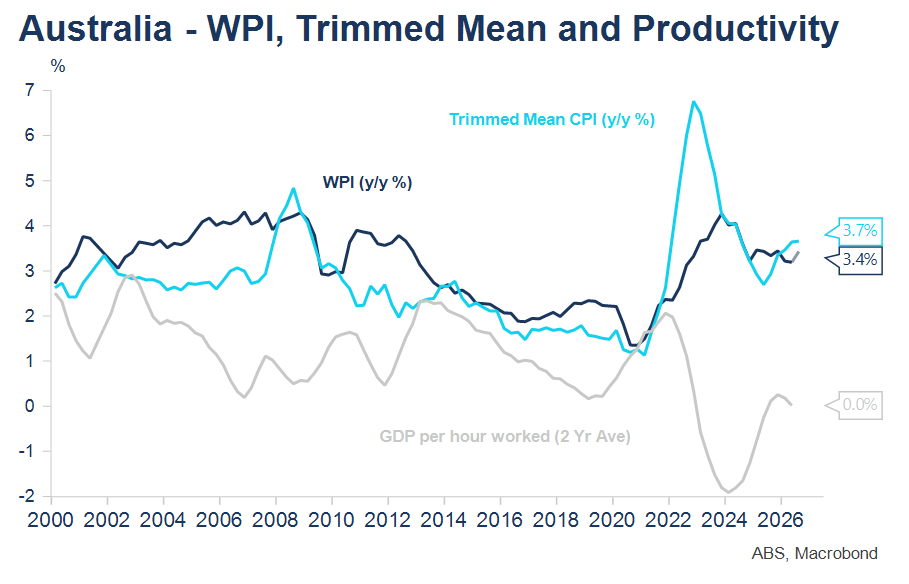
The unwise size of this year’s 6% Minimum and 4.75% Modern Award wage increases are the key factors in the expected 1% q/q increase in the WPI in Q3. That will see the y/y rate of WPI inflation rise to 3.4%. The SEEK Advertised Salary Index continues to print 0.3% m/m outcomes which is also consistent with 3.5% wage price index outcomes. However, with Australian productivity growth running at very low (almost negligible) levels these wage outcomes mean wages growth largely continues to underpin Australian inflation at above RBA target levels. When inflation was last under control in Australia in the mid-2010s, wages growth was running more around the 2.5% level and productivity growth was positive.
Australian Labour Force – Employment
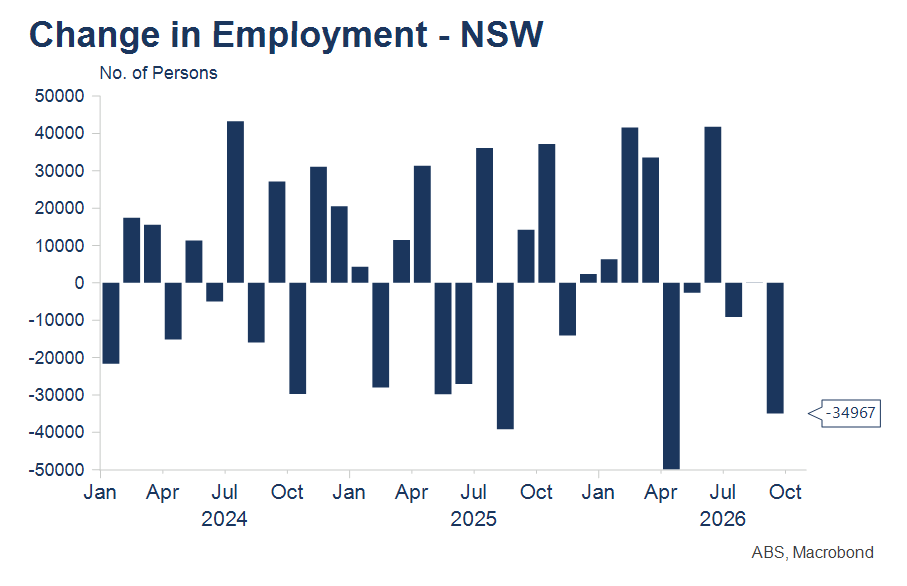
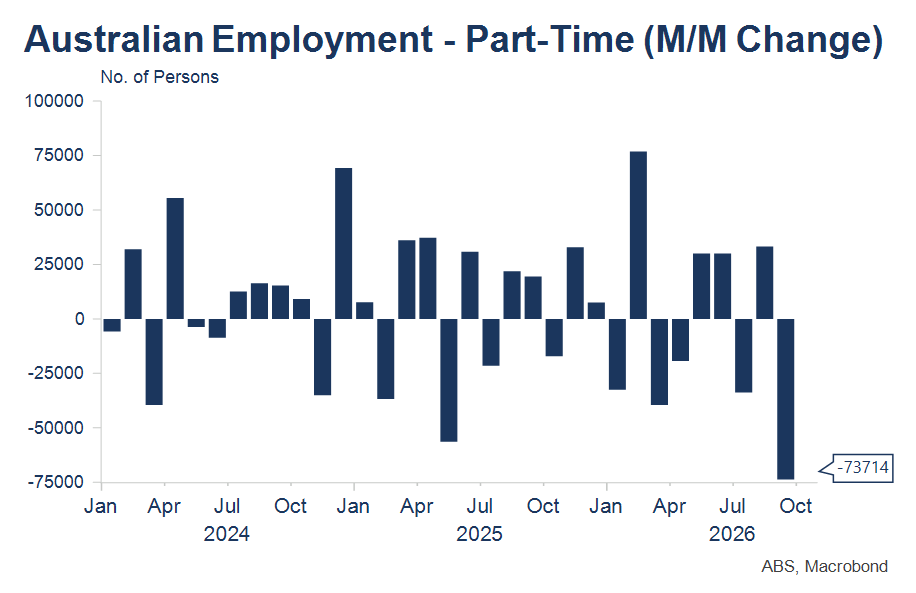
This month’s data will be an important test for my assessment that recent labour market data have given a false impression of current weakening trends in Australia’s labour market. The ABS’s modernisation of its survey is likely the culprit. Several unusual moves in sub-components of the September data support that conclusion, namely, the alleged near 1% drop in NSW employment last month, and the also very large drop in part-time employment in the month.
Normally, I ignore the full-time/part-time split in any month, however the size of last month’s fall in part-time employment was so large as to drive the overall move in employment in the month. This leaves me reluctant to discount and inclined to look for a sharp reversal. Relative to the market forecast of a 25,000 rise in employment, I therefore see considerable upside risks.
Australian Labour Force – Unemployment
The recent rise in the unemployment rate similarly looks overstated to me. That’s not to say that this isn’t the current trend, but the moves seem a bit too steep over the past two to three months. We saw a similar largely inexplicable rise in the underemployment rate around the middle of the year. Around half of that rise has now reversed. That’s why the risk lies on the downside for the unemployment rate this month.
This isn’t likely to see the RBA considering anything but an extended hold for cash rates after five moves over the course of 2026 and the back-to-back increases of the most recent board meetings. However, whether the recent rise in the unemployment rate proves ephemeral is important to the extent that the RBA’s forecasts have been based off an unrepresentatively high starting point.